

Written by Jilopa K Ezra
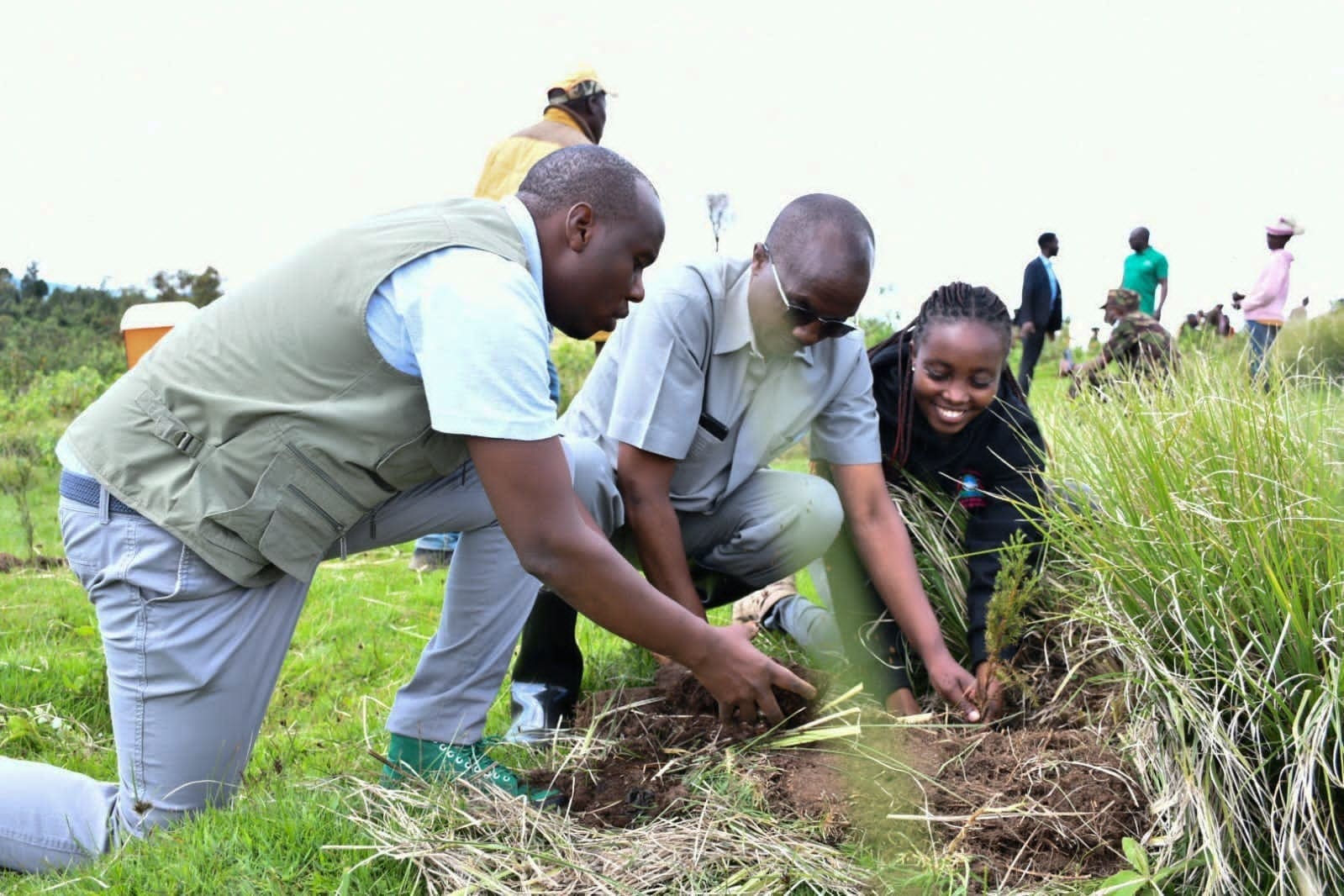
The Nakuru County Government, under the leadership of Governor Susan Kihika, has continued to make significant strides in environmental conservation since assuming office in 2022, with tree growing and ecosystem restoration emerging as one of the county’s flagship climate action initiatives.
Through the Department of Water, Environment, Energy, Climate Change and Natural Resources, the county has implemented an aggressive tree-planting programme that has transformed degraded landscapes, strengthened environmental protection, and enhanced resilience to the effects of climate change.
Working in partnership with the Kenya Forest Service (KFS), Kenya Wildlife Service (KWS), Kenya Prisons Service, Green Belt Movement, schools, universities, community forest associations, community-based organisations, faith-based organisations, civil society organisations, the private sector and other development partners, the county has facilitated the planting of an estimated 4.2 million trees between 2022 and June 2026. Of these, approximately 1.7 million trees were planted directly by the Nakuru County Government through departmental programmes and county-led environmental campaigns.
Trees Planted (2022 – June 2026)
Year| Trees Planted
2022| 600,000
2023| 1,100,000
2024| 1,400,000
2025| 700,000
January – June 2026| 400,000
Total| 4,200,000
The trees have been planted in forests, riparian reserves, water catchment areas, public schools, hospitals, markets, urban centres, road reserves, public institutions, government offices and open spaces across all the eleven sub-counties. The initiative has also encouraged farmers to establish woodlots and integrate trees into agricultural production through agroforestry, thereby increasing farm productivity and environmental sustainability.
To ensure high survival rates, the county has invested in establishing tree nurseries, community awareness programmes, and regular monitoring of planted seedlings. Local communities, youth groups, women’s groups and environmental champions have been actively involved in raising seedlings, planting trees and nurturing them to maturity, reinforcing the importance of collective responsibility in environmental conservation.
The programme has played a critical role in restoring degraded forests, rehabilitating riverbanks, protecting wetlands and preserving fragile ecosystems that are vital for water security. Increased vegetation cover has helped reduce soil erosion, minimise siltation of rivers and dams, improve groundwater recharge and enhance biodiversity by creating habitats for birds and other wildlife.
In urban areas, the county has intensified tree planting along major roads, streets, public parks and recreational spaces, significantly improving the aesthetic appeal of towns while providing shade, reducing dust pollution and lowering temperatures associated with urban heat islands. These beautification efforts have enhanced the attractiveness of Nakuru as a destination for tourism, investment, and business.
Schools have remained key partners in the campaign, with thousands of learners participating in environmental education programmes and tree planting exercises. By involving children and young people, the county is nurturing a generation that appreciates the importance of environmental conservation and sustainable management of natural resources.
Healthcare facilities have also benefited from the initiative through landscaping and greening programmes that have created cleaner, healthier and more welcoming environments for patients, healthcare workers and surrounding communities.
Nakuru County CECM for Water and Environment, Dr Nelson Maara, who has been leading the countywide tree-planting and ecosystem restoration exercise, said the initiative aims to restore degraded landscapes, protect water catchment areas, and build resilience to the effects of climate change.
Dr Maara noted that the department has continued to work closely with national government agencies, development partners, schools, community groups, faith-based organisations, and the private sector to ensure that tree-planting campaigns are conducted throughout the year across all eleven sub-counties.
He emphasised that, beyond planting trees, the department is focused on ensuring the seedlings survive through proper nurturing, monitoring, and community ownership, adding that every tree planted is an investment towards a greener, healthier, and more climate-resilient Nakuru.
He further reaffirmed the department’s commitment to accelerating ecosystem restoration through innovative partnerships, community participation and climate-smart interventions that address the growing impacts of climate change while safeguarding forests, rivers, wetlands and other critical ecosystems for future generations.
The county has aligned its tree-growing programme with the National Landscape and Ecosystem Restoration Strategy and Kenya’s target of attaining at least 30 per cent national tree cover by 2032. Through continuous collaboration with national government agencies and development partners, Nakuru is making meaningful contributions towards the country’s climate commitments and the achievement of the Sustainable Development Goals.
Beyond tree planting, the Department of Water, Environment, Energy, Climate Change and Natural Resources continues to implement complementary initiatives including river rehabilitation, watershed conservation, environmental education, solid waste management, climate change awareness campaigns and the promotion of clean and renewable energy solutions. These interventions are strengthening the county’s resilience while improving the quality of life for residents.
As the county marks the milestone of over 4.2 million trees planted since 2022, the Nakuru County Government remains committed to expanding forest cover, restoring degraded ecosystems and fostering a culture of environmental stewardship. The county continues to call upon residents, institutions and stakeholders to actively participate in tree growing and environmental conservation, recognising that every tree planted today contributes to a greener, healthier and more prosperous Nakuru for generations to come.