
Written by Benard Wanyonyi
Since taking office in 2022, H.E. Governor Susan Kihika’s administration has steadily repositioned agriculture from a traditional livelihood to a modern economic engine, restoring neglected value chains, expanding farmer support programmes, and investing in livestock, fisheries, and food production.
The result has been higher agricultural productivity, improved market access, stronger food security and new income opportunities for thousands of farming households, reinforcing Nakuru’s position as one of Kenya’s leading agricultural counties.
As one of the country’s most productive agricultural regions, Nakuru depends heavily on farming for jobs, food and economic growth. Recognising this, the county government has focused its investments on high-impact value chains, including dairy, pyrethrum, avocado, coffee, potatoes, maize, and edible oil crops, while strengthening extension services and developing policies to make agriculture more profitable and climate-resilient.
One of the county’s biggest success stories has been the revival of the avocado value chain. Since 2022, the county has distributed 278,943 grafted avocado seedlings valued at more than Sh110 million to farmers across Nakuru. The programme has expanded avocado farming to approximately 11,000 acres and benefited over 22,576 farmers, transforming the crop into a reliable source of commercial income for many households.
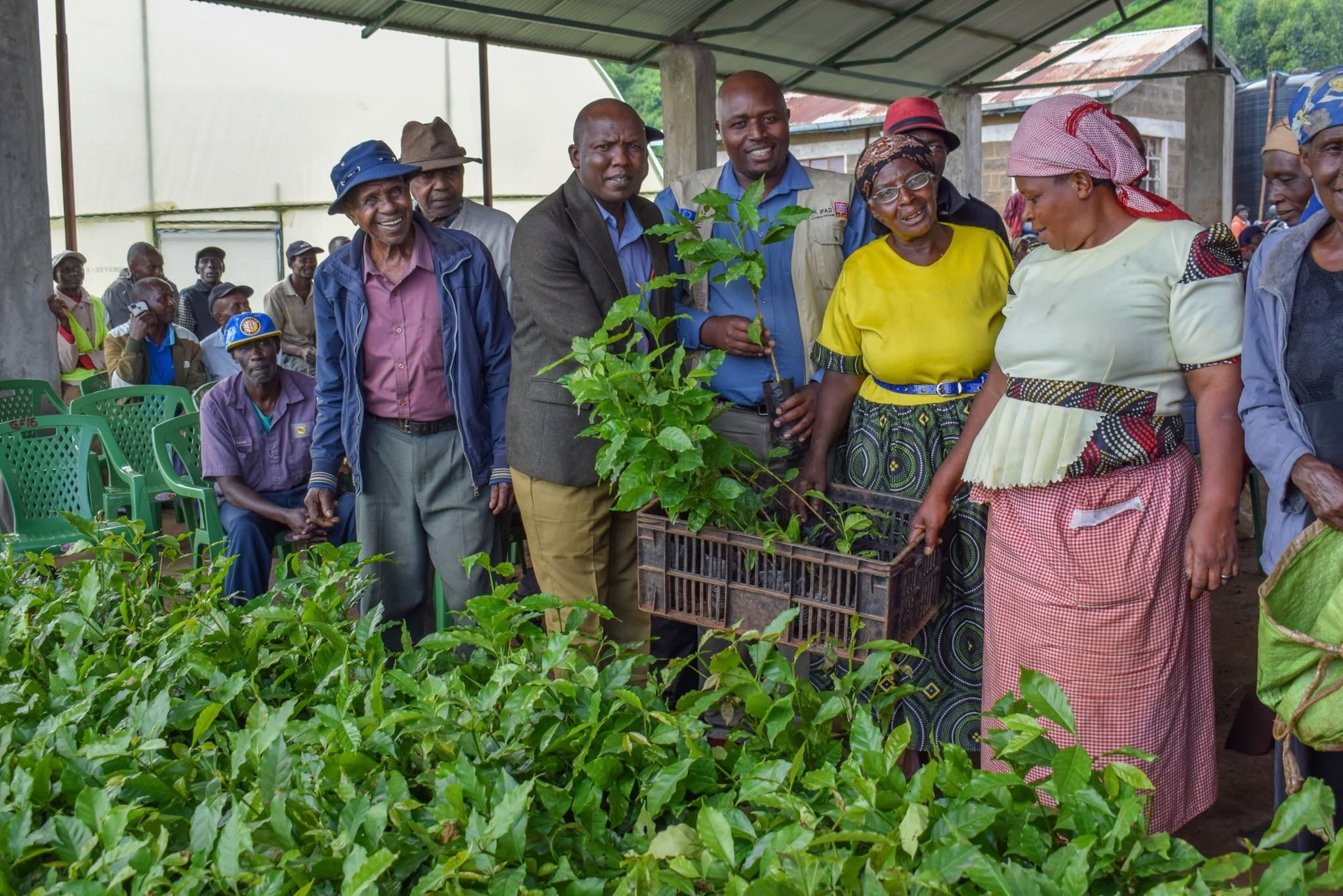
To strengthen household food security, the county supplied 42 metric tonnes of maize seed to 10,500 vulnerable households, helping families maintain production despite changing weather patterns. Coffee farming has also received renewed attention, with 40,166 coffee seedlings distributed to more than 2,000 farmers in Kabazi Ward in Subukia and Solai Ward in Rongai. The programme is currently being expanded to reach even more growers.
Governor Kihika’s administration has also championed edible oil crop production through a partnership with the National Government. The county distributed 62 tonnes of sunflower seed and five tonnes of canola seed to more than 13,000 farmers, an achievement that earned Nakuru the country’s top ranking for implementing the Edible Oil Crops Promotion Programme.
Equally significant has been the remarkable revival of pyrethrum farming, a crop that once defined Nakuru’s agricultural economy before years of decline. Since 2022, the county has distributed more than 33.9 million pyrethrum seedlings worth over Sh126 million to 11,000 farmers. More than 5,000 acres have been placed under cultivation, firmly restoring Nakuru as the national leader in the resurgence of Kenya’s pyrethrum industry.
Beyond production, the county has improved market access by constructing and renovating 39 tea-buying centres, enabling farmers to sell their produce more efficiently and reducing post-harvest losses. Access to subsidised fertiliser has also improved significantly through the establishment of 17 satellite fertiliser stores under the Last Mile Fertiliser Distribution Programme. Working alongside the National Cereals and Produce Board (NCPB), the county facilitated the distribution of more than 777,000 bags of fertiliser, earning Nakuru second place nationally for the initiative.
The livestock sector has experienced similar growth. In 2025 alone, Nakuru produced 326 million litres of milk valued at Sh14.6 billion, supported by more than 27 active dairy cooperatives with a combined membership exceeding 54,000 farmers. To reduce milk losses and improve quality, the county equipped nine dairy cooperatives with milk coolers and standby generators.
Livestock productivity has further improved through a subsidised Artificial Insemination Programme backed by Sh25 million since 2023. The initiative has reached 8,266 farmers, conducted 2,697 inseminations, procured 5,900 semen straws and distributed 15 artificial insemination kits, helping farmers improve the quality of their dairy herds.
Animal health has remained a key priority. Veterinary officers have vaccinated 187,286 livestock against various diseases, while the county is implementing an ambitious Foot and Mouth Disease vaccination campaign targeting 800,000 animals in partnership with the National Government and the National Agricultural Value Chain Development Project (NAVCDP).
The county has also invested in fisheries and the blue economy. Since the 2022/23 financial year, Nakuru has restocked 526,666 fingerlings in Lake Naivasha, dams and fish ponds to replenish fish stocks and improve production. Additionally, seven eco-tourism boats have been supplied to four Beach Management Units, creating alternative income opportunities for young people while promoting sustainable utilisation of aquatic resources.
Livestock improvement programmes have expanded beyond dairy cattle. The county distributed 238 dairy goats to 25 farmer groups, while a Sh25 million poultry improvement project supplied 34,781 improved indigenous chicks to 343 farmer groups, benefiting more than 13,000 residents across Bahati, Gilgil, Naivasha, Nakuru East and Molo. Another 37 farmer groups received poultry incubators and backup generators valued at Sh3.89 million, boosting local hatchery capacity and poultry production.
To cushion dairy farmers during prolonged dry seasons, the county constructed a feed store and hay barn at Rongai Acacia Dairy Cooperative Society at a cost of KSh2 million. The facility can store more than 2,000 bales of hay and serves over 800 dairy farmers in Visoi Ward and neighbouring areas.
These investments have been reinforced by strengthened agricultural extension services delivered through programmes such as NAVCDP, the Kenya Livestock Commercialisation Project (KeLCoP) and the Edible Oil Crops Promotion Project, enabling farmers to adopt modern technologies and climate-smart farming practices. At the same time, the county has strengthened the legal framework for agricultural transformation by launching its Agroecology Policy and advancing key legislation, including the Extension Policy, the ATC Bill, the Livestock Sale Yard Bill, the Animal Welfare Act implementation, and the CASSCOM Bill.
Taken together, these initiatives demonstrate a deliberate effort by Governor Kihika’s administration to restore neglected sectors, re-engineer agricultural systems, expand farmer support and improve productivity across crops, livestock and fisheries. Beyond the impressive figures, the investments are helping thousands of families earn better incomes, strengthening food security and cementing Nakuru’s reputation as one of Kenya’s foremost agricultural powerhouses.