Introduction
The County Government of Nakuru is committed to empowering youth through Vocational Training Centers (VTCs). Nakuru County’s quality vocational and technical training is aimed at enhancing skills, improving employability, and supporting local industry needs.
As a devolved function under the 2010 Constitution (Fourth Schedule, Part 2), vocational education and training fall under the Department of Education, Vocational Training, ICT, E-Government, and Public Communication.
By addressing youth unemployment and equipping learners with practical, market-driven skills, vocational training plays a key role in driving economic growth and development. It also supports the county’s journey toward industrialization in line with Kenya Vision 2030 and contributes directly to the Bottom-up Economic Transformation Agenda (BeTA).

As a devolved function under the 2010 Constitution (Fourth Schedule, Part 2), vocational education and training fall under the Department of Education, Vocational Training, ICT, E-Government, and Public Communication.
By addressing youth unemployment and equipping learners with practical, market-driven skills, vocational training plays a key role in driving economic growth and development. It also supports the county’s journey toward industrialization in line with Kenya Vision 2030 and contributes directly to the Bottom-up Economic Transformation Agenda (BeTA).

Mandate
- Provision of vocational and technical training education
- Provision of vocational and technical training facilities
- Skill upgrading with the emerging issues in the curriculum
- Develop policies and regulations to govern vocational training
- Monitoring and evaluation of vocational training programs
- Implementation of vocational training policies
- Provision of vocational training instructors and other staff
- A globally competitive system in vocational training, research, and innovation for sustainable development.
- To churn out highly skilled graduates in technical, vocational, innovation, and research, advancing the industrial economy.
- Accountability: Upholding transparency and responsibility in all actions and decisions.
- Equal Opportunity: Ensuring fair access to training and resources for all individuals.
- Excellence: Striving for the highest standards in training, research, and service delivery.
- Innovation and Creativity: Encouraging novel ideas and solutions in technical and vocational education.
- Integrity: Committing to honesty, ethical conduct, and trustworthiness.
- Professionalism: Demonstrating competence, respect, and dedication in all professional undertakings.
- Respect: Valuing diversity and treating everyone with dignity.
- Teamwork and Commitment: Promoting collaboration and dedication to achieve common goals.
- Promote skills acquisition through competency-based training with proficiency assessment for employment, sustainable livelihoods, and responsible citizenship.
- Revitalize, modernize, and harmonize vocational training centres in line with TVET to integrate the centres into the mainstream education and training system for trainees' employment and development of market-driven skills.
- Establish an institutional framework that ensures a coherent partnership amongst government, employers, professional associations, non-governmental organizations, community, and industry to promote good governance, for the growth and prosperity of VTCs.
- Facilitate resource mobilization and allocation for infrastructural development and human capital in the directorate.
- Ensure quality training in vocational training Centers that facilitate competitive participation in the community, national, regional, and global economy.
- To ensure that the vocational training centers provide improved access and equity for the youth, women, and persons with special needs.
- Mobilize all stakeholders in a concerted effort to create synergies and share responsibilities for the adaptation of TVET policies, programs, and strategies in vocational training centers.
- Promote and popularize information and communication technology as a medium of learning, trade, management, and development in vocational training centers.
List of Vocational Centers
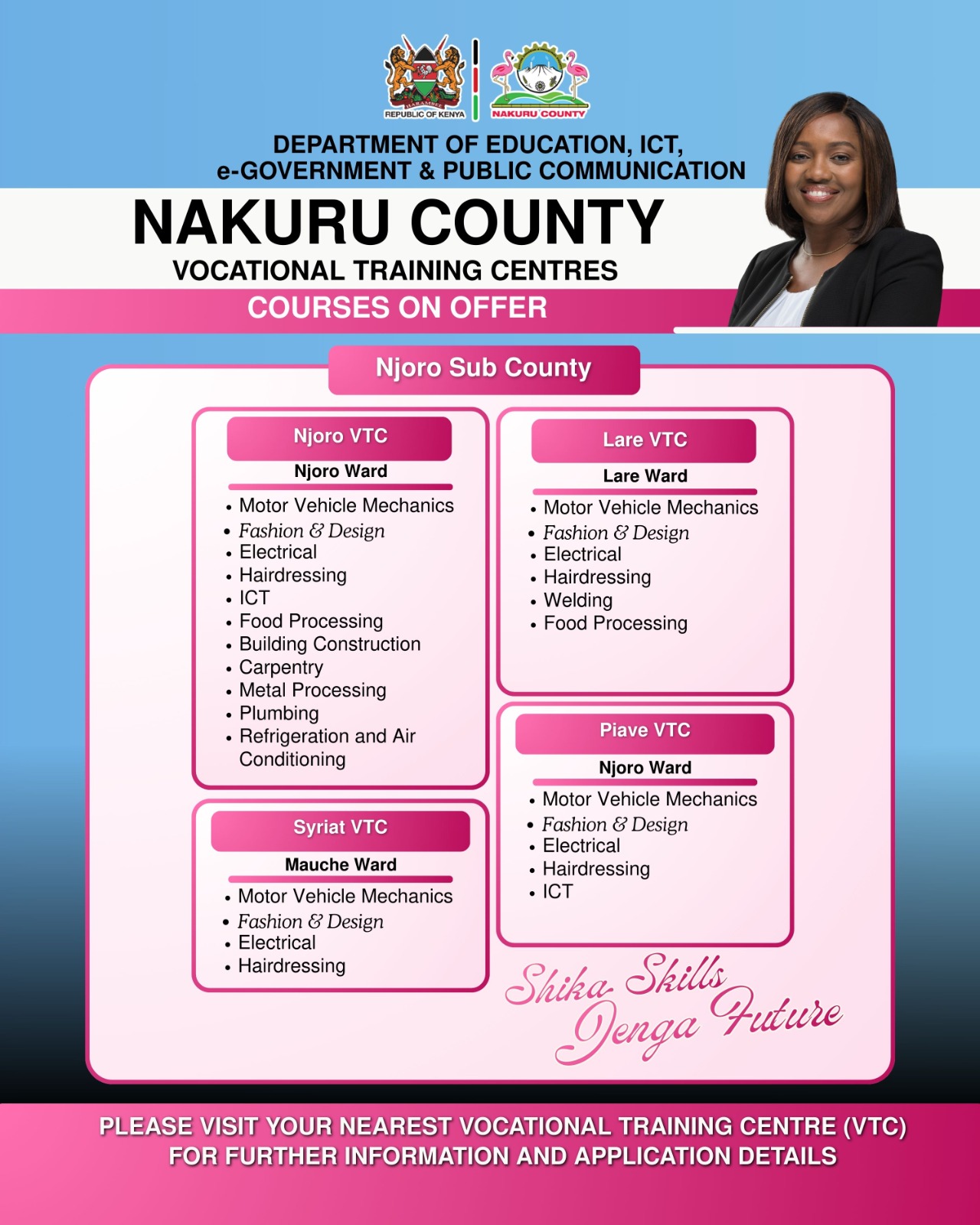
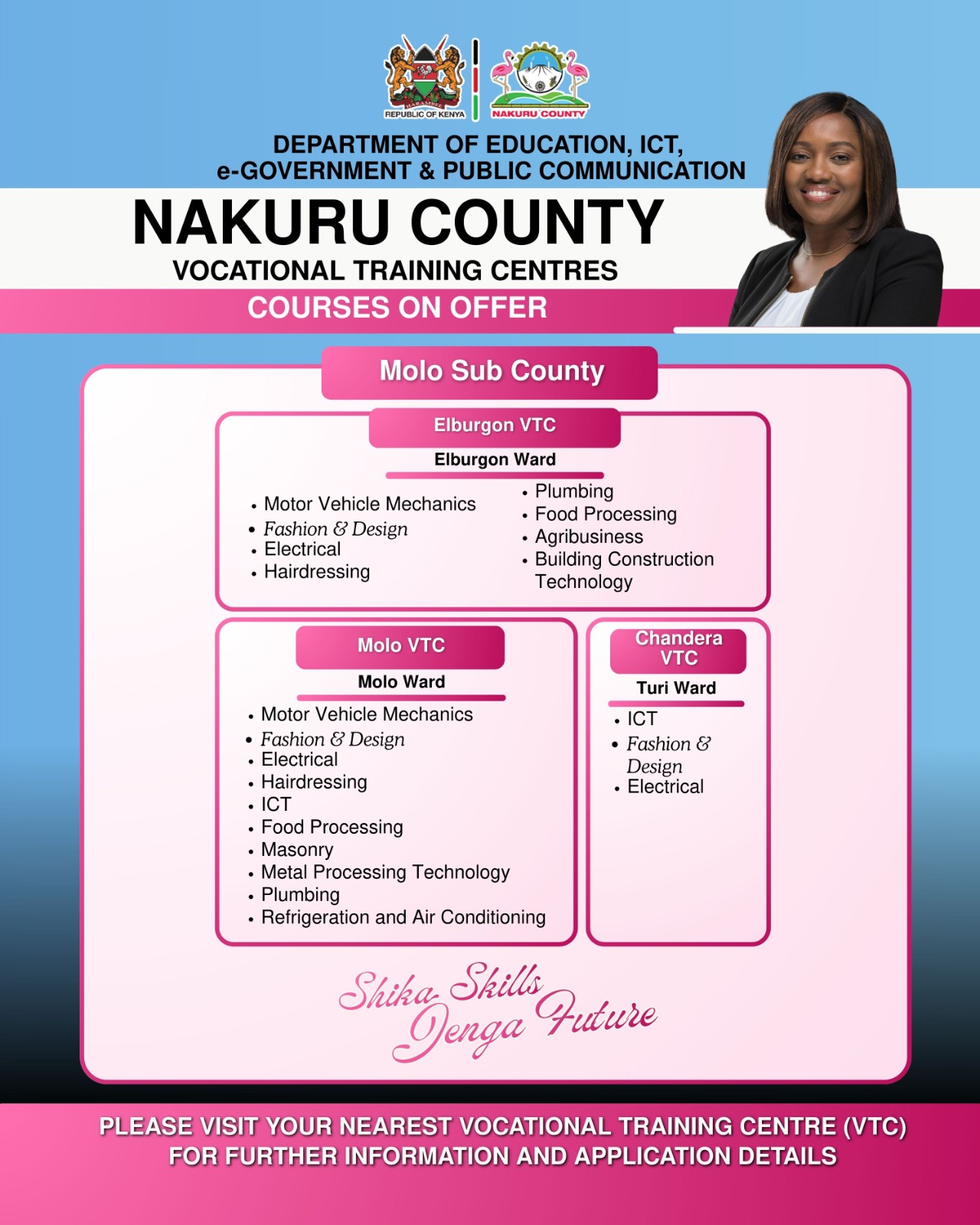
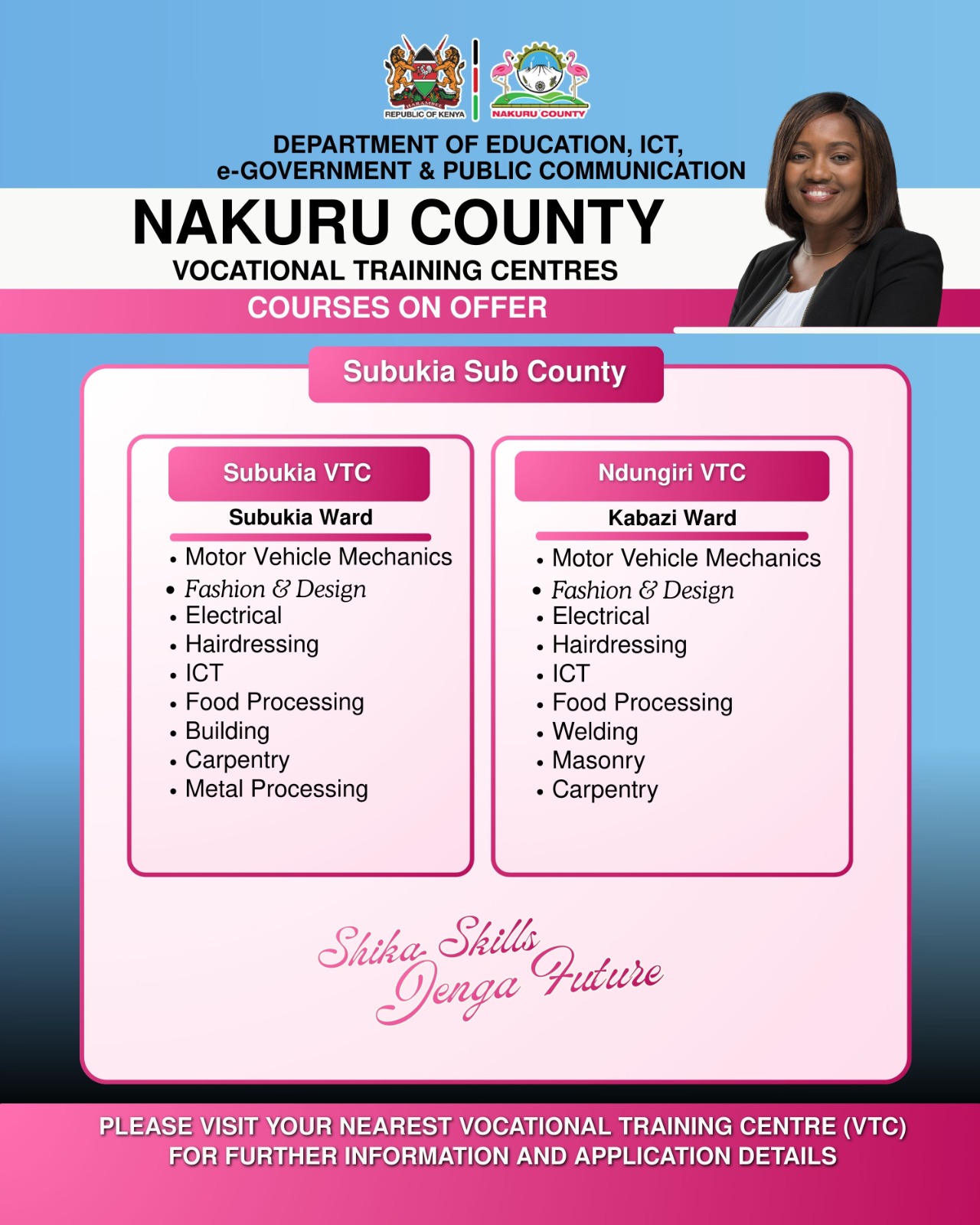
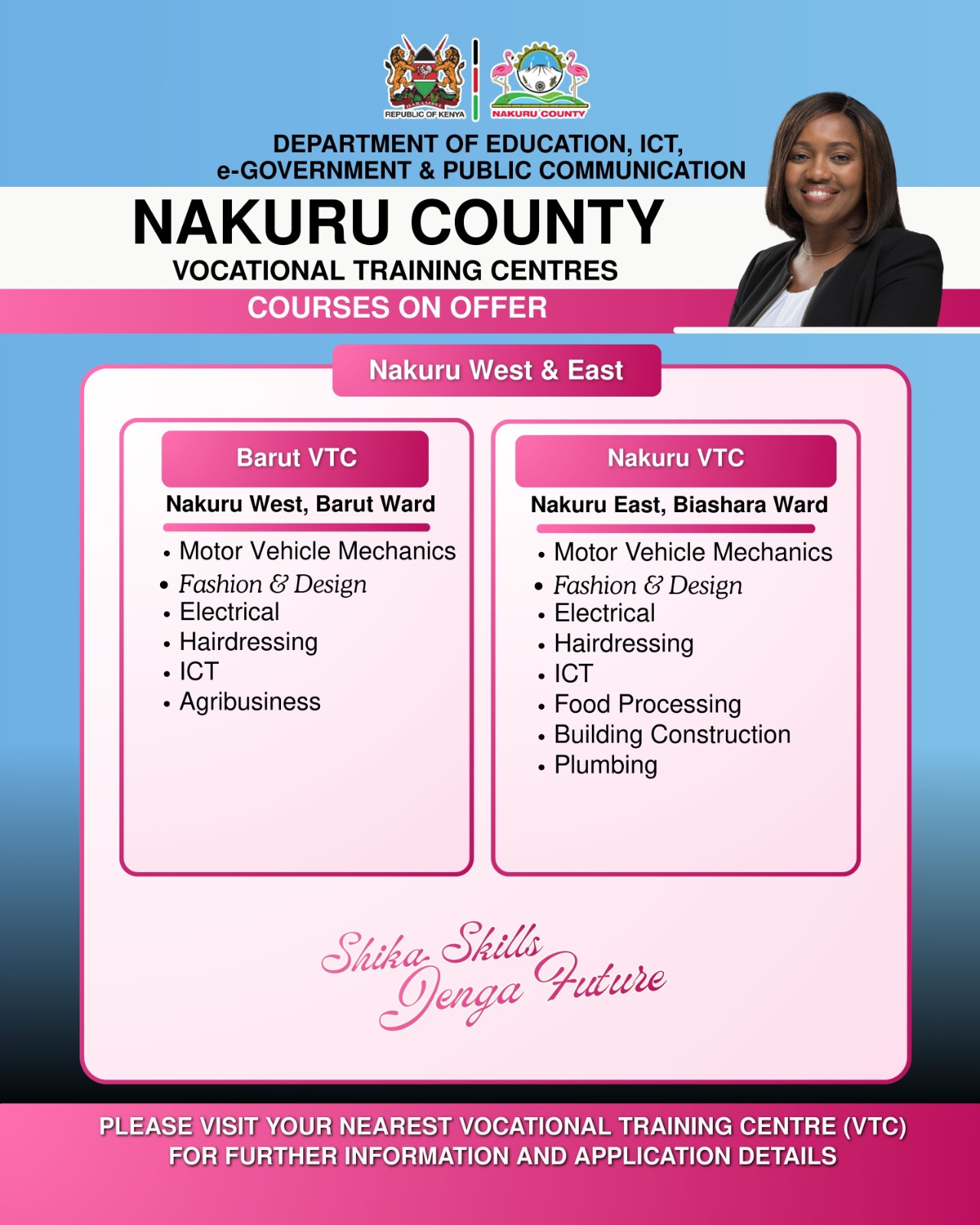
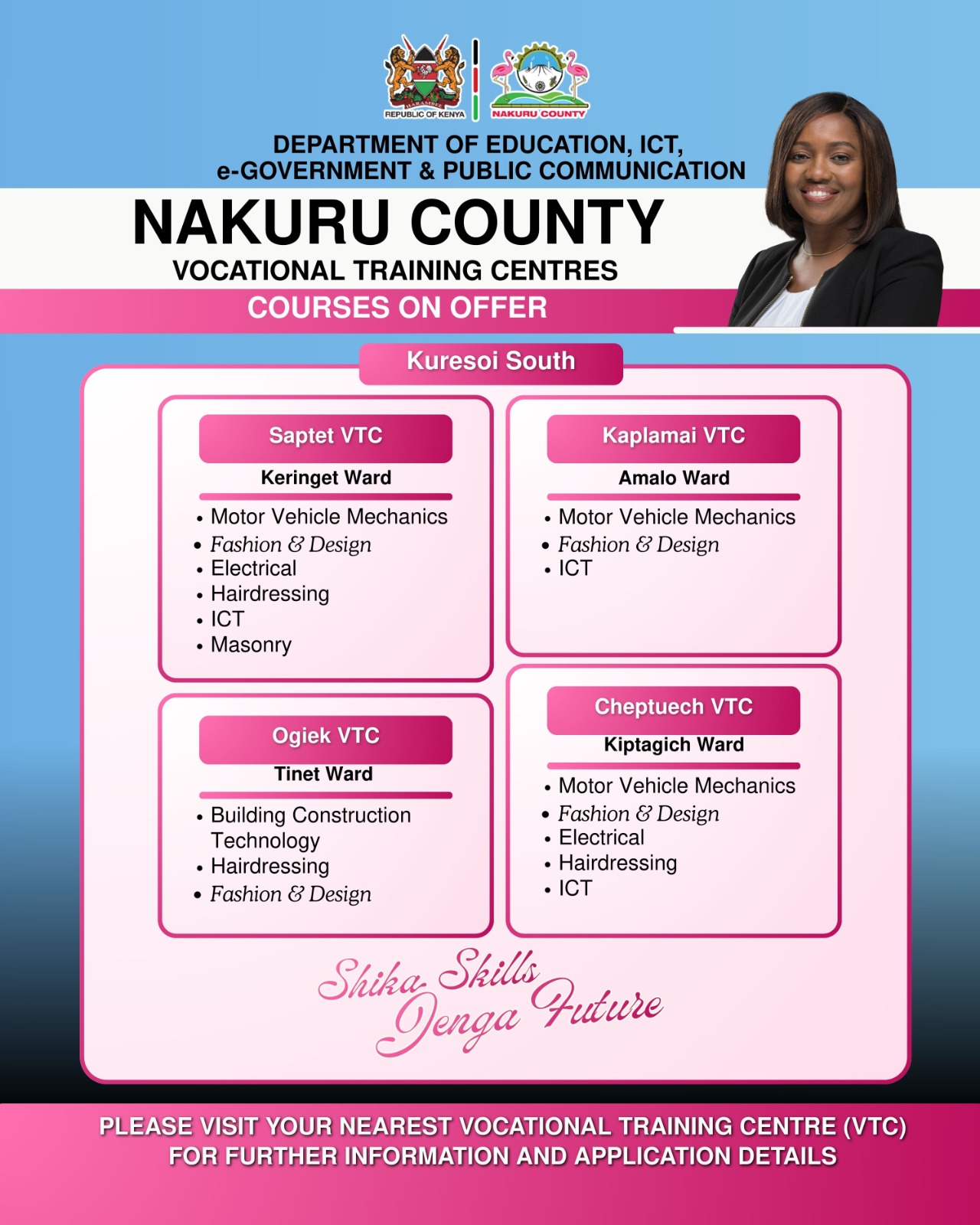
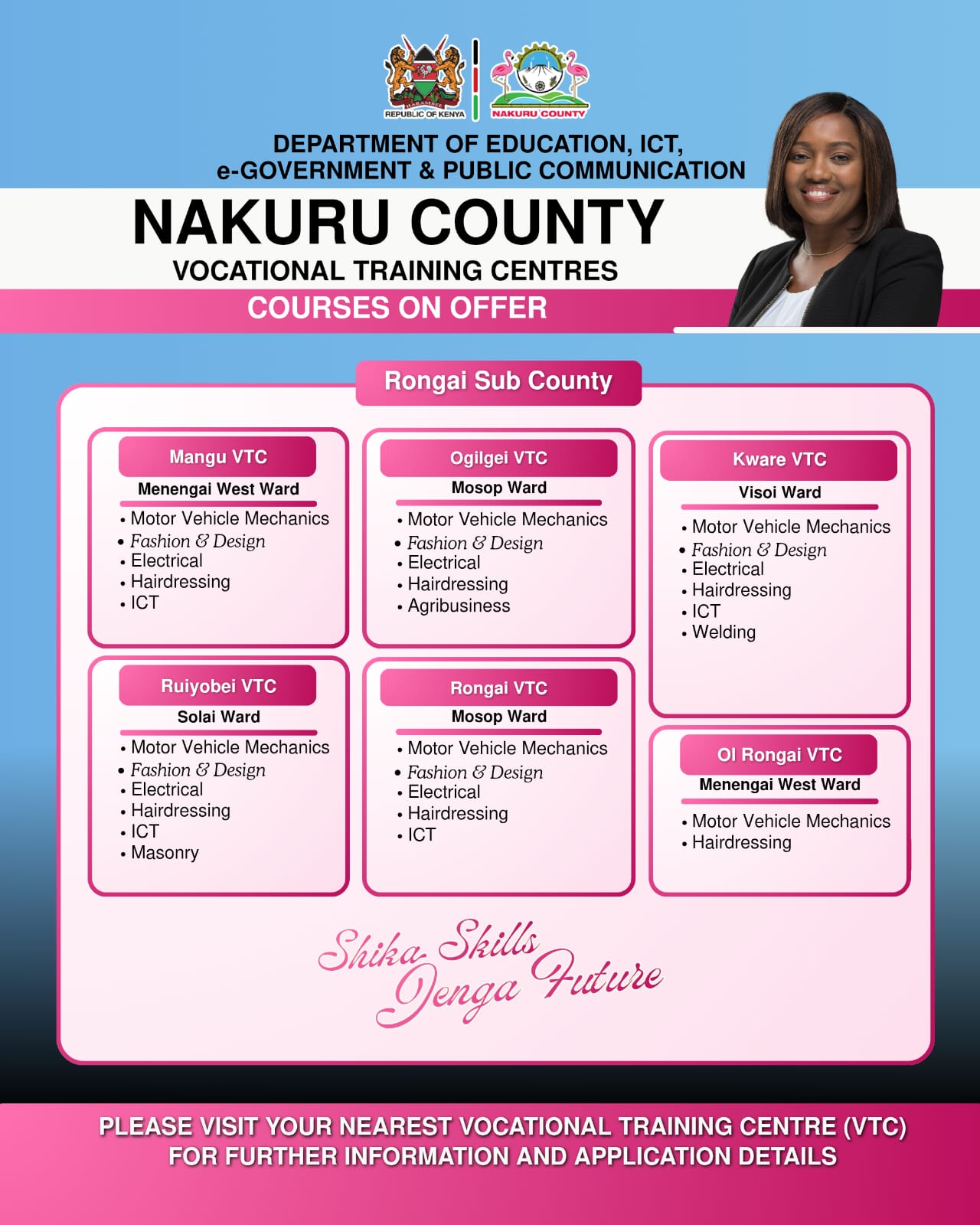
Vocational Training Center Courses
Vocational Centers Gallery


Vocational Center Trainees
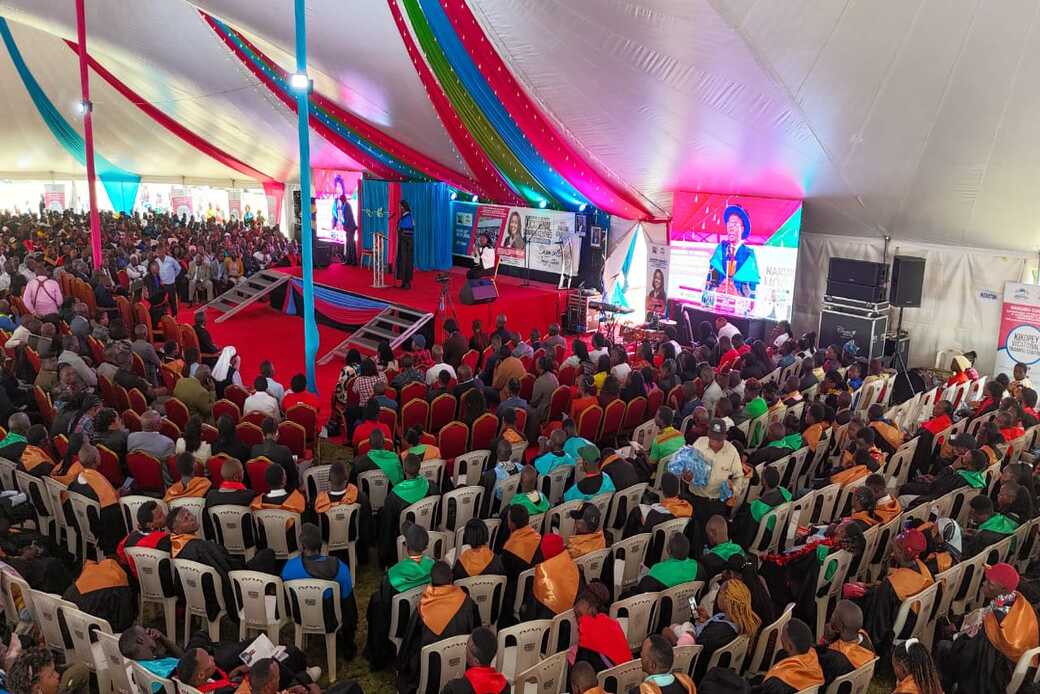
Vocational Training Graduation
A vibrant gallery showcasing trainees actively engaged in classroom learning. 📚✨
📸 VTCs in Action: Explore our digital gallery showcasing facilities, learning activities, and student engagement. 🚀✨
e-Government Services
Download Resources
- VTC-Admission-Procedures-Jan.-2023 pdf (631kb)
- Vocational training service charter pdf (103kb)
All Services
- Revenue Administration
- Accounting Services
- Financial Services
- Economic Planning
- Supply Chain Management
- Budgeting
- Early Childhood Development Education (ECDE)
- Vocational Training Centers
- Public Communication
- Roads and Public Transport
- Bridges and Drainage Systems
- Public Structures and Buildings
- Street Lighting
- Youth Development
- Sports
- Gender
- Social Services
- Water and Sanitation
- Environment and Natural Resources
- Climate Change and Energy
- Land Valuation Administration and Management
- Physical Planning
- Urban Development
- Housing
- Division of Agriculture
- Livestock Production
- Division of Fisheries
- Veterinary Services
- Human Resource Management and Development
- Disaster Management and Humanitarian Assistance
- Public Participation and Citizen Engagement
- Careers
- ICT and e-Government
- Internal Audit
- Resource Mobilization
- Land Survey
- Agriculture Engineering Services
- Training Research and Extension Services
- Public Service Administration and Devolution
- Inspectorate Services PSTD
- Plant and Soil Health Management
- Nakuru City Board
- Municipality of Naivasha
- Municipality of Gilgil
- Municipality of Molo
- Culture
Vocational training service charter
pdf
(103kb)